Birds of a Feather (Creatureliness)
Sermon Recap: Who gets the first blessing in Scripture? Not Adam, Eve, or Abraham. It's the fish and the birds. Before any human appears, God looks at the crowded seas and sky and says be fruitful, multiply (Genesis 1:20–22). They hadn't done anything to earn it. God blessed them because they existed, and called them good. Psalm 104 shows the whole world as one noisy dinner table that God sets, and Jesus says "consider the ravens" (Luke 12:24). Ravens were unclean scavengers nobody much loved, and God feeds them anyway.
Francis of Assisi saw creatures as kin, not props or property: Brother Sun, Sister Water, birds listening to a sermon on the roadside. So at the Blessing of the Animals, we bless our animals and also let them preach to us. They don't worry about tomorrow, and they trust there will be seed, because "it is your Father's good pleasure to give you the kingdom" (Luke 12:32).
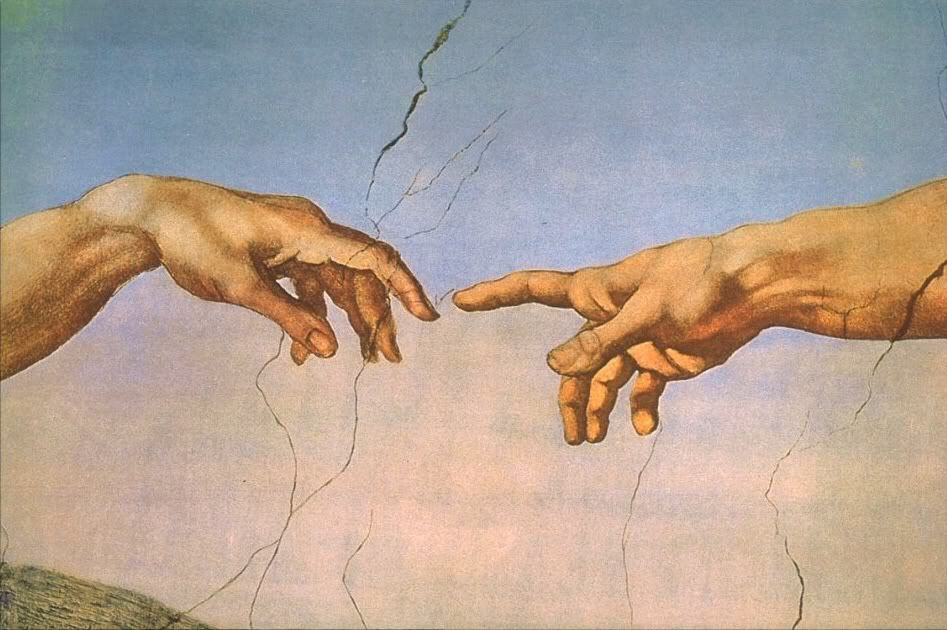
Creatureliness
Before Christian theology says anything about what makes human beings special, it says something more foundational: we are creatures. Theologians call this creatureliness — the condition of being made, dependent, and finite, sharing existence with everything else God has called into being. It sounds obvious, but it's surprisingly easy to forget.
Genesis 2 makes the point with dirt. God forms the first human from the dust of the ground (Genesis 2:7) — the Hebrew is a pun, adam from adamah, an earthling from the earth. A few verses later, God forms the animals out of the very same ground (Genesis 2:19). Whatever else distinguishes us, we and the beasts of the field share a common origin and a common Maker. We're made of the same stuff.
Francis of Assisi took this seriously. In his Canticle of the Creatures (c. 1225), written near the end of his life, he praises God through Brother Sun, Sister Moon, Brother Wind, Sister Water, and finally even "Sister Bodily Death." Calling creation family wasn't mere sentimentality; it was a theological claim that every creature comes from the same Father.
Eight centuries later, the pope who took Francis's name put it this way in Laudato Si': as part of the universe, "called into being by one Father, all of us are linked by unseen bonds and together form a kind of universal family" (§89). Other creatures, he adds, have value of their own in God's eyes, because "by their mere existence they bless him and give him glory" (§69) — a line he grounds, fittingly, in Psalm 104.
The theologian Willie James Jennings of Yale Divinity School pushes this further, and with a sharper edge. In The Christian Imagination: Theology and the Origins of Race (2010), Jennings argues that something went terribly wrong when European Christianity spread through colonialism. People had long understood who they were in relationship to land — particular places, particular soil, the creatures and communities around them. Colonial Christianity tore that up, coming to see bodies in terms of their market value rather than their place in creation, and the modern idea of race grew in that uprooted soil. Part of the damage, according to Jennings's, is that Christians lost the sense of being creatures at all — people embedded in a world of land, animals, and neighbors — and began imagining themselves hovering above it as owners and managers.
In his 2026 Warfield Lectures at Princeton Theological Seminary, Only Then Will We Build: Forming a Real Doctrine of Creation, and in his forthcoming book Reframing the World, Jennings calls the church back to the ground. As he put it in one interview, "I began to consider what God is aiming at with us as creatures of the dirt," which meant thinking "more carefully now about the sustaining redemptive healing realities of life with dirt, with animal life, life in the world." For Jennings, the incarnation settles the matter: the Son of God took on creaturely, embodied life, so creaturely life can never be treated as disposable. And rather than "stewardship," he favors reciprocity — a web of giving and receiving that runs between people, land, and animals alike.
So what about the image of God (Genesis 1:26-28)? Creatureliness doesn't erase it; it reframes it. Humans do have a particular calling — to name, to tend, to exercise dominion — but it's a calling given to one creature among many, not a transcendence beyond creation. As Laudato Si' puts it, "the Bible has no place for a tyrannical anthropocentrism unconcerned for other creatures" (§68). The image of God is a vocation exercised from inside the family, not from above it. (See "What Will It Profit You? (Creation)" for more on what dominion does and doesn't mean.)
Genesis 3 shows what's really at stake. The serpent doesn't tempt Adam and Eve to be wicked. He tempts them to be gods: "you will be like God" (Genesis 3:5). The first sin, in other words, is a refusal to be a creature — the wish to stop depending on God and start being like one. The colonial story Jennings tells is one about that same wish, just played out on a global scale.
The Gospel responds by moving in the opposite direction. We tried to climb up out of creatureliness; God came down into it. In Jesus, "the Word became flesh" (John 1:14) — dust, hunger, and all. So creatureliness isn't the problem God came to fix. It's the life God came to restore. We were never meant to be gods. We were meant to be creatures, and to be glad of it.
Sources
Francis of Assisi, Canticle of the Creatures (c. 1225).
Pope Francis, Laudato Si' (2015), §§68, 69, 89. https://www.vatican.va/content/francesco/en/encyclicals/documents/papa-francesco_20150524_enciclica-laudato-si.html
Willie James Jennings, The Christian Imagination: Theology and the Origins of Race (Yale University Press, 2010).
Willie James Jennings, interview with Jason Myers, "Faith Rooted in the Ground," EcoTheo Review. https://www.ecotheo.org/etreview/faith-rooted-in-the-ground
Willie James Jennings, Only Then Will We Build: Forming a Real Doctrine of Creation, Annie Kinkead Warfield Lectures, Princeton Theological Seminary, March 16–26, 2026. https://warfield.ptsem.edu/current-lectureship/
Center for Theology and Inquiry, "Warfield Lecturer Willie Jennings Reimagines the Doctrine of Creation." https://www.ctinquiry.org/news/warfield-lecturer-willie-jennings-reimagines-the-doctrine-of-creation


Comments