Getting Divine Hands Dirty (The Incarnation)
Sermon Recap: This sermon explores the story of Jacob and Esau as more than a tale of sibling rivalry. It places their conflict within the larger story of Genesis, where nearly every family chosen by God is marked by deception, favoritism, betrayal, and broken relationships. Rather than abandoning these deeply flawed people, God remains faithful to the covenant, quietly bringing redemption out of human failure again and again.
That same pattern reaches its fulfillment in Jesus, whose own genealogy is filled with imperfect people. God does not wait for ideal families before entering the world; God enters ours as they are.
For those carrying the pain of strained relationships, divorce, addiction, loss, or long-standing family conflict, this offers genuine hope. Scripture does not promise that every relationship will be restored exactly as we wish, but it does promise that God's faithfulness is greater than our brokenness. Jacob's unexpected reconciliation with Esau reminds us not to confuse today's reality with God's final word. We are invited to leave room for grace, forgiveness, and the surprising work of God—even when healing seems impossible.
(Given 7-12-26, St. Augustine's Church, Kingston RI)

One of the ideas quietly sitting beneath this week's sermon is one of the Church's biggest claims: the incarnation.
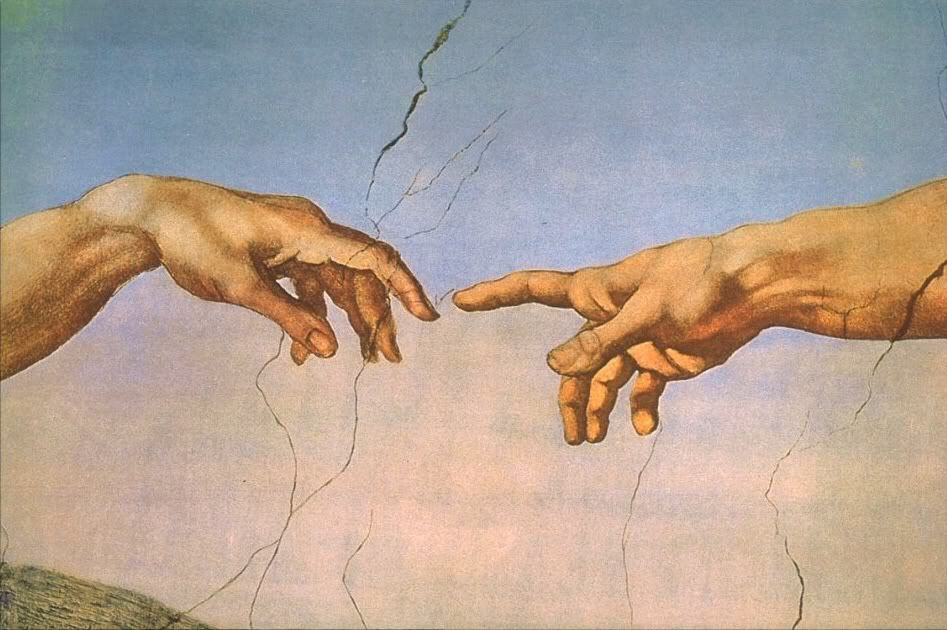
It's one thing to say that God loves the world. It's another to say that God entered it.
Christians confess that in Jesus, God didn't simply send a message or offer instructions from a distance. God took on our humanity, embracing everything that comes with it: family, friendship, work, grief, joy, hunger, rejection, and even death. The incarnation is God's refusal to remain distant from the people God loves.
The early Church defended this conviction fiercely because they believed our salvation depended on it. If Christ only appeared to be human, then humanity itself remained untouched. But if God truly assumed our humanity, then human nature itself could be healed and restored. As St. Athanasius famously wrote, "For He was made man that we might be made God" (*On the Incarnation* 54). Salvation isn't simply about escaping this world someday; it's about God beginning the work of renewing humanity from the inside out.
Reflecting on the opening of Matthew's Gospel, St. John Chrysostom points to Jesus' genealogy as evidence of this mystery. Matthew doesn't hide the complicated people in Jesus' family tree. He names them. Christ enters a real family with a real history, not an idealized one (*Homilies on Matthew* 2.2–4). The incarnation tells us that God isn't ashamed to enter the ordinary—and often messy—realities of human life.
That's what makes the incarnation more than a Christmas doctrine.
It means there is no part of ordinary human life that God has declared beneath divine concern. Our work, our relationships, our families, our failures, our joys, and our grief all become places where God is present and at work.
The God Christians worship isn't one who watches history from a safe distance, but rather the God who entered into it.

Comments