Pick Up! It's God Calling (Vocation)
Sermon Recap: This sermon reflects on Jacob’s wrestling at the Jabbok River as a picture of faith during seasons when we cannot fix or change what is in front of us. Jacob begins by wanting God to change his circumstances, but through the long night he learns instead to cling to God, honestly confront who he is, and receive a new identity and blessing before anything about his circumstances has changed.
Long-suffering is not the glorification of suffering, but the faithfulness to remain present with God when answers have not yet come. Jacob crosses the river still facing an uncertain future—and still carrying a limp—but now he does so knowing he is blessed and belongs to God.
For Christians, that assurance is ultimately grounded in Christ: God has already crossed the river to meet us, so we can face an uncertain tomorrow without having to earn God's blessing there. Sometimes God changes our circumstances; sometimes God changes us; and often God first reminds us who we are and whose we are.
(Given 8-2-26, St. Augustine's Church, Kingston RI)

We tend to talk about vocation as though it were a career aptitude test administered by God. What am I supposed to do with my life? We imagine that somewhere out there is the one thing God has called us to do, and if we can just figure it out, everything will fall into place.
Christian theology offers something considerably less tidy—and much more freeing.
For Augustine, the fundamental question of the Christian life isn't simply What should I do? but What do I love? He argued that the Christian life involves learning to love rightly: to love God above all things and to love our neighbors in relation to that love. In On Christian Doctrine, Augustine describes the good life as one in which we neither love what we shouldn't nor love good things in the wrong measure.¹
Our problem isn't that we love too much, or perhaps even too little; it's that our loves are often disordered.
That gives us a different way to think about vocation. Vocation isn't primarily about discovering a particular job, ministry, or grand purpose. It's about learning to recognize where God has placed us and asking what love requires of us there.
Martin Luther helped broaden this understanding by arguing that vocation wasn't reserved for priests and religious professionals. Ordinary work and ordinary relationships could become genuine Christian vocations because they are places where Christians serve their neighbors.² The farmer, parent, teacher, neighbor, business owner, and yes, the pastor all have vocations. The calling isn't made holy by the title attached to it; it becomes a place of Christian discipleship through love and service.
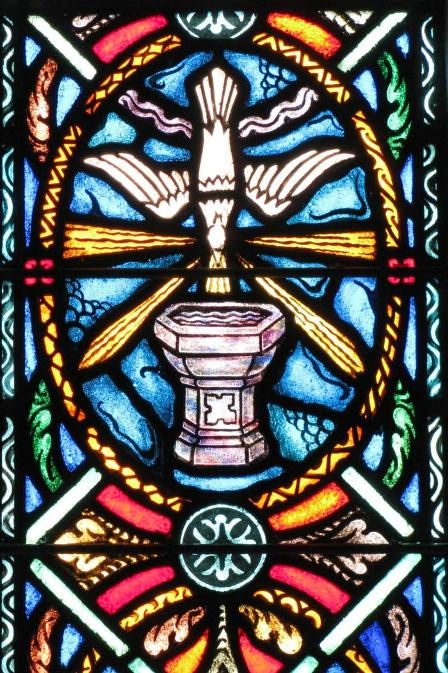
And that call begins before we ever figure out what we're "supposed to do". In baptism, God claims us as God's own. We don't first discover our purpose and then become Christians. We receive an identity in Christ and then spend our lives learning how to live from it.
That's part of what makes Jacob's story so compelling. God gives Jacob a new name before Jacob knows exactly what tomorrow will require of him. The blessing doesn't come with a five-year plan. It gives him enough to take the next step.
Maybe vocation is more like that than we usually imagine. Not a single grand assignment waiting to be uncovered, but a lifelong invitation to become the kind of person who can recognize God's call in the ordinary places where we already find ourselves.
And that kind of vocation isn't reserved for priests, pastors, missionaries, or anyone else with a religious title. If you've been baptized, you've been called. The question isn't whether God is calling. It's whether we're willing to pick up.
¹ Augustine, *On Christian Doctrine* I.27–28, where he describes the “order of love” and argues that God is to be loved above all things, with our neighbors loved for God's sake.
² Martin Luther's doctrine of vocation developed the idea that ordinary stations of life are genuine arenas of Christian calling and service to one's neighbor. See, for example, the Oxford Research Encyclopedia's overview of Luther's theology of vocation.

Comments